
Sample analysis · no sign-up
What happens after you submit a mock
DemoA sample sitting of CAT 2024 Slot 1, used to show the analysis. Every screen below is the real app, showing what it worked out for that sitting. Every section explained, with video.
A score tells you how a mock went. It doesn't tell you what to do tomorrow. Here is everything CATin does with one sitting, from the moment it's submitted to the check two days later.
-
01
The mock: 67 out of 204
CAT 2024 Slot 1, sat as a timed mock and scored the CAT way: +3 for a right answer, −1 for a wrong MCQ, 0 for a wrong TITA. 40 questions attempted, 26 right, 14 wrong.
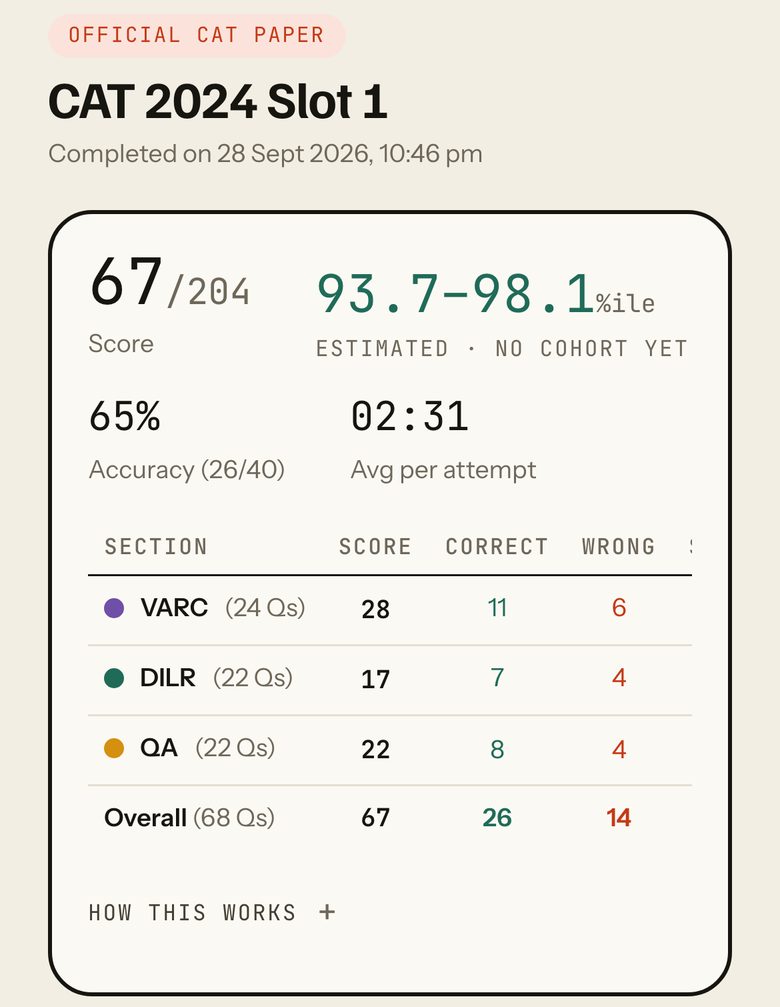
The score card, ready the moment the mock was submitted. Why a range, and why "estimated". Until 30 students have sat a paper on CATin, the percentile is read from CAT-level score-to-percentile data sets that we have used, reviewed and put up. The IIMs don't publish this mapping, and the marks needed for a percentile move from year to year, so the app shows a range and labels it an estimate. Once 30 students have taken the paper, the percentile is measured from their real first attempts. How the estimate is built.
-
02
What cost marks
Topic by topic, with the negatives. Bar & Line Charts cost the most: 3 wrong, −3. Then Para Summary and Para Jumbles, 2 wrong each. 11 marks went in negatives in all.
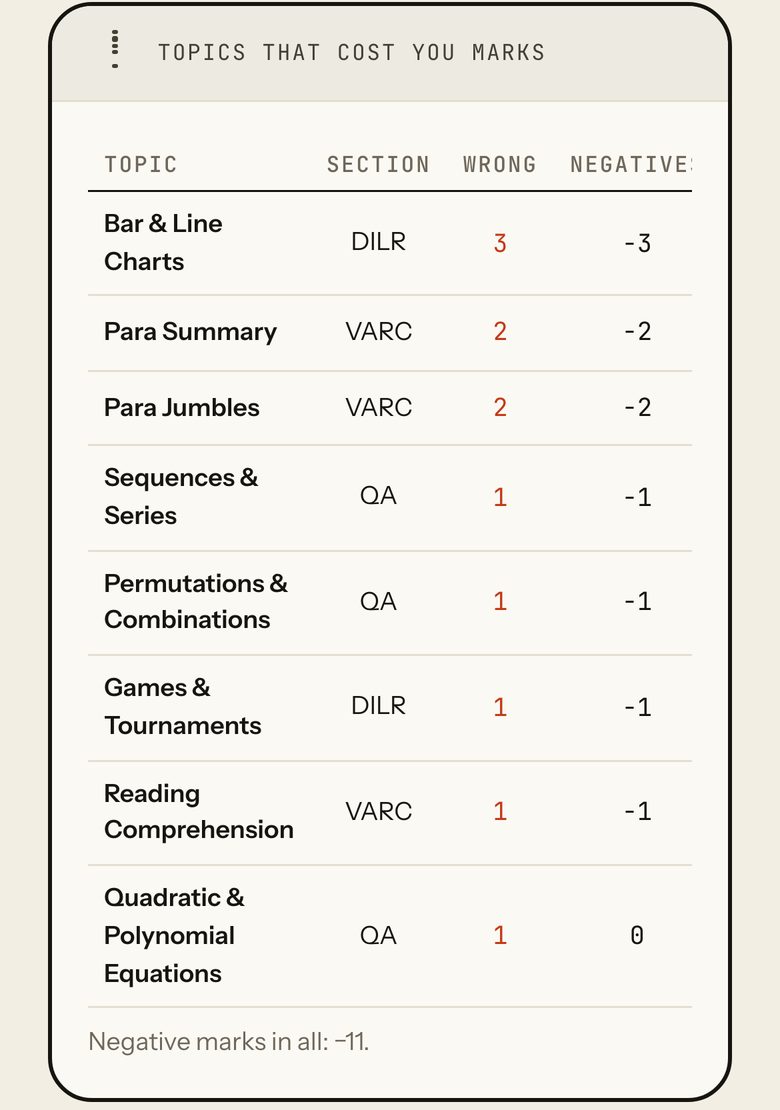
Topics that cost marks, worst first. 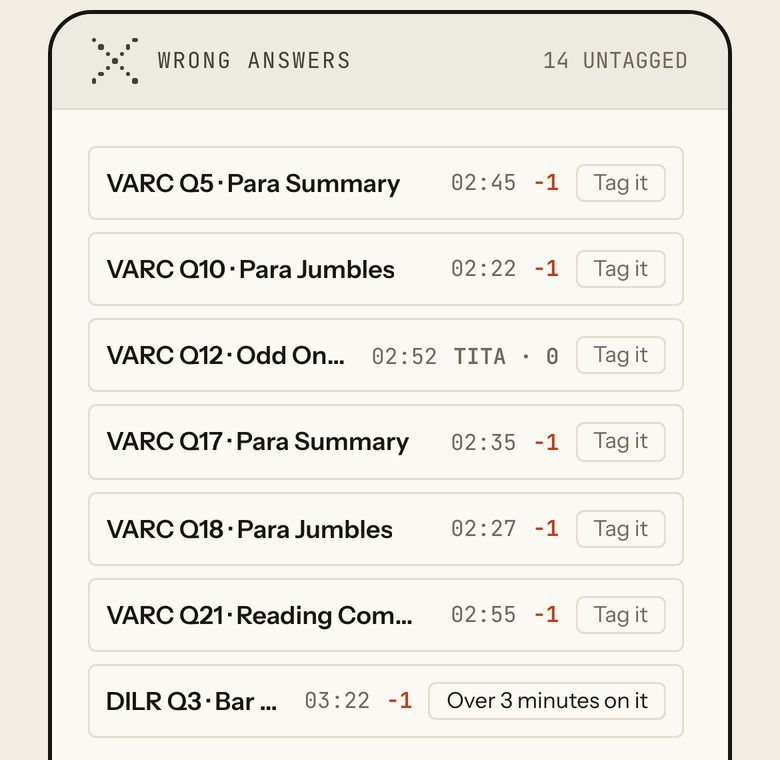
Every wrong answer, with its time and a tag to add. Each wrong answer gets a reason, in one tap: careless slip, concept gap or rushed by the clock. The reason decides what comes back in revision. The analysis also shows:
- first half against second half: did accuracy hold as the section went on;
- Looking back: your score re-worked three ways with hindsight (not a prediction);
- a worked solution for every question, and a re-attempt before you read it.
-
03
Where the time went
Each section ran close to its 40 minutes. The leak is lower down: 14:32 went on 4 questions that were skipped in the end, 8:20 of it on 3 DILR questions and 6:12 on a single QA question. Eight wrong answers took more than 3 minutes each, three of them Bar & Line Charts.
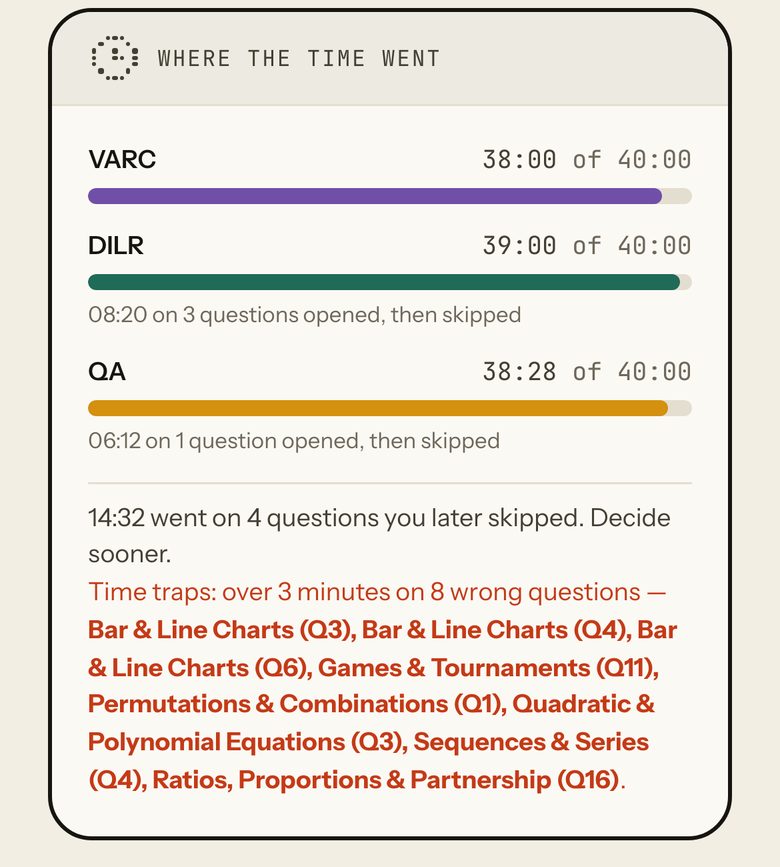
Minutes by section, and the time sunk into skips. 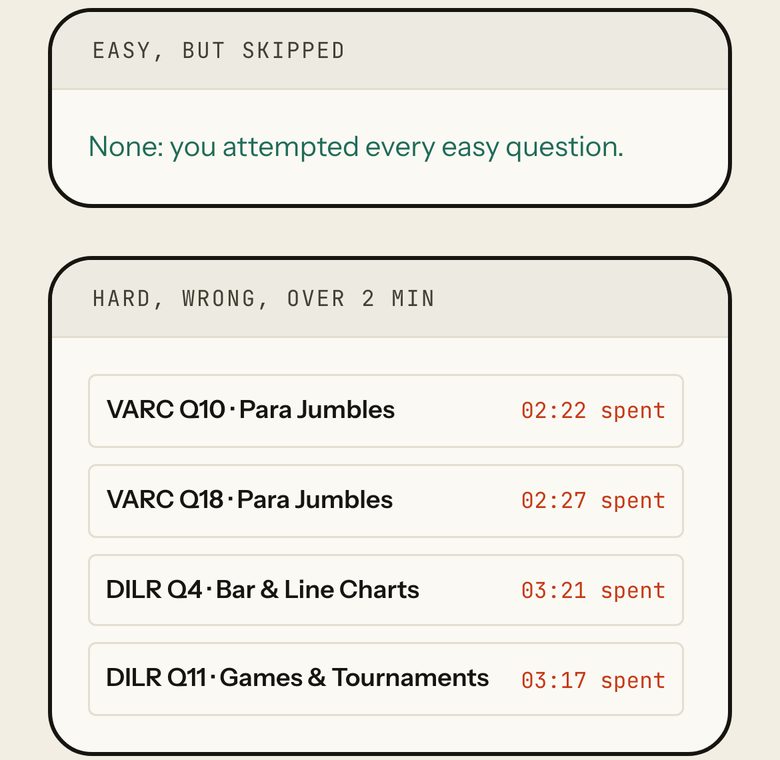
Easy questions left (none here), and hard ones that cost time and a mark. No easy question was left, so this sitting's marks went on time and choice, not on easy skips. That is a different fix from "practise more".
-
04
The 3 fixes it suggests New
Under the analysis, a small "Your next fixes" card offers up to three things to fix, each read from this sitting alone. You keep the ones you'll act on. On this sitting it offers:
- Bar & Line Charts: 3 wrong, −3The most negative marks of any topic. Ten practice questions on it.
- Go through and tag 14 wrong answers14 of 14 wrong answers have no reason yet. The tags decide what comes back.
- Remainders: 6:12 on 1 skipped questionThe biggest time sink: decide sooner.
The card is new, so it is described here rather than shown. New alongside it: a DILR set-selection drill, practice in choosing which sets to attempt and which to leave.
-
05
They lead tomorrow's plan
The sitting was on Monday 28 Sep. This is the plan the next morning: go through the paper first, then the topics the mock exposed, each kept in the plan "until you get 6 of your last 8 right on it". The fixes you keep go at the top of that list.
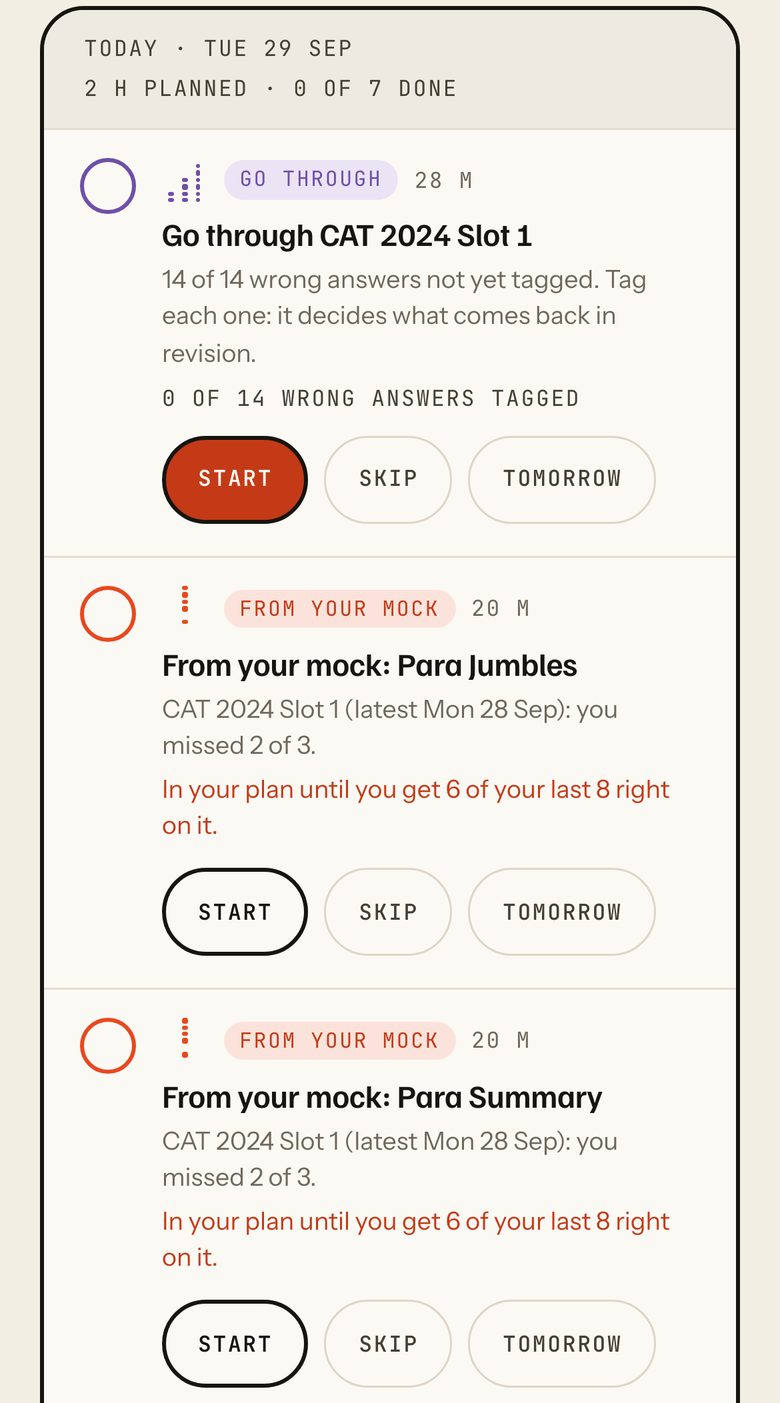
The plan on Tue 29 Sep, the morning after the sitting. Short on time? Tell it you have 30, 45 or 60 minutes today. It keeps the tasks that matter most and fit, fixes first, and puts the rest under "Later", without marking them missed.
-
06
Two days later: a check on questions you haven't seen New
When you finish the practice for a topic fix, CATin schedules a check two days later: 5 questions on that topic you have never answered, about 8 minutes. Getting old questions right again can be memory. New questions show whether the fix held.
The check is scored apart from revision of the questions you got wrong, so you can see the two separately.
-
07
Try it on your own mock
Only CATin connects every step: you sit a timed mock → the analysis is ready the moment you submit → you keep up to 3 fixes → they lead tomorrow's plan → you practise them → 2 days later, a check on questions you haven't seen tells you whether the fix held.
The official CAT papers from 2023, 2024 and 2025 are free, with the full analysis. Pro opens all 80+ CAT mocks and the planner. One payment, no auto-renewal.